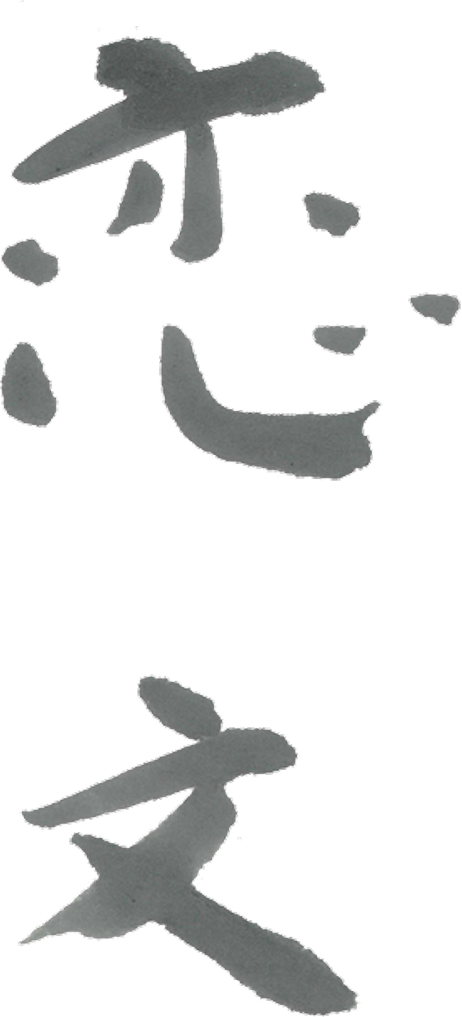
Tsuki / Taiyo:
A Social Device forShaping
Ideas Beyond the Ordinary
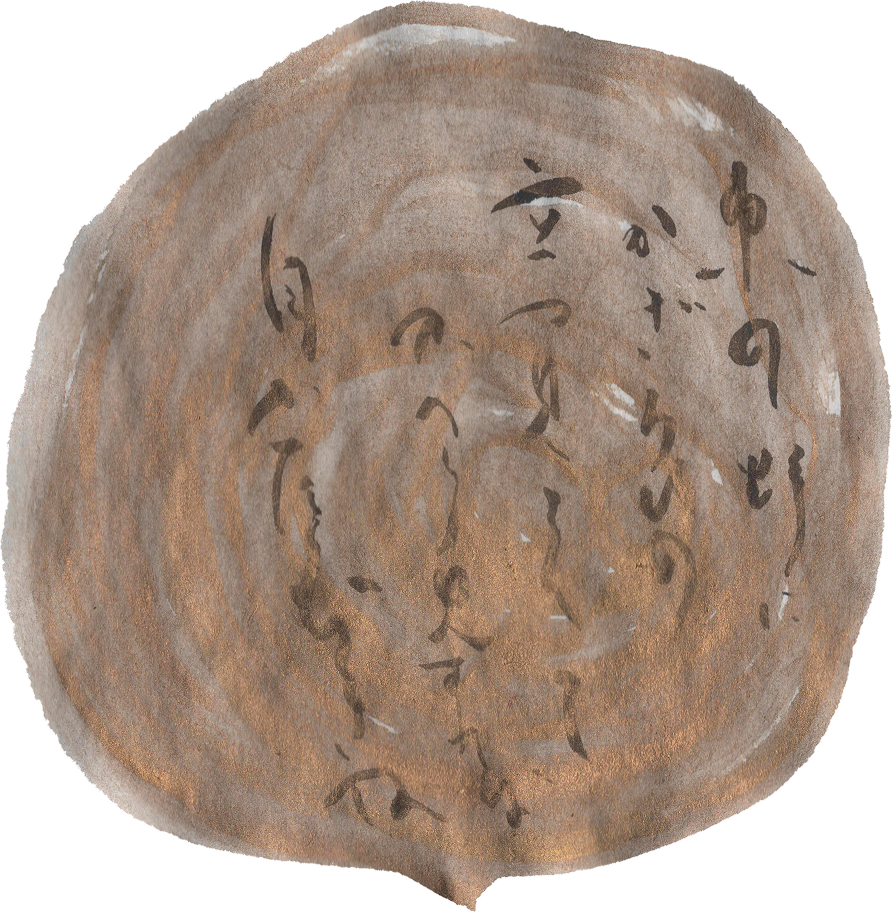
(poet; 662–710)
To the east
I see the rising
sun over the fields.
But if I look back
I see the moon setting.
The juxtaposition of the sun and moon in this poem speaks to the essence of all things in nature; not only time and light, but with them the cycles of the seasons and the passage of life.
Why do we live? The poet confronts this question, ceaselessly searching for himself. Amid the relentless cycle of life, illuminated by the sun and the moon, he wishes to find meaning, to live fully as himself.
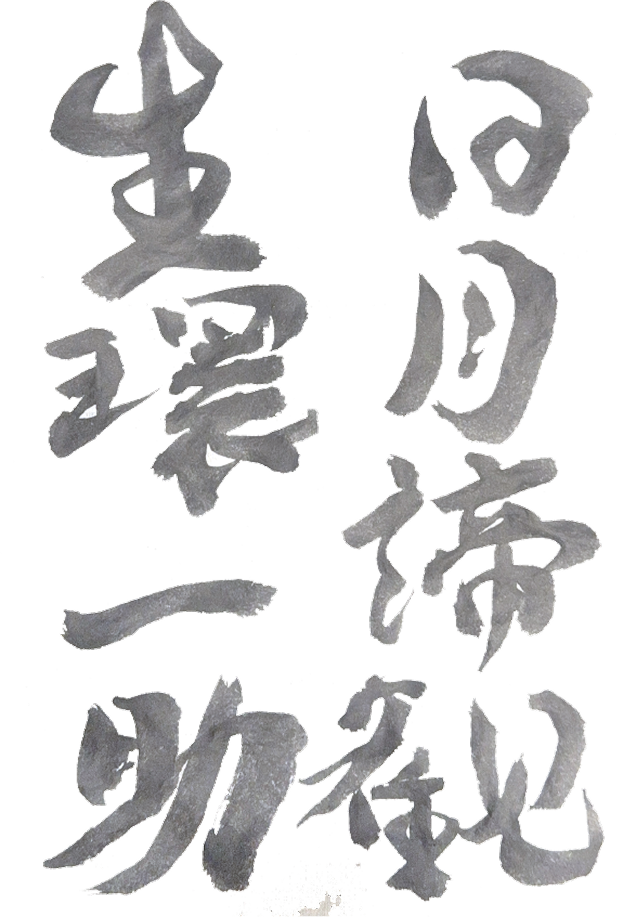
This is the Tsuki / Taiyo
philosophy.
To establish viewpoints from all directions, from the heights of the sky to the depths of the horizon. To observe things as they are, unbound by prejudice, unskewed by self-interest, until they become clear.
Finding meaning in life filled with hardship and struggle. Discovering the intrinsic value of things and people.

Essence
born from
overlapping
circles
Like the rings on a tree, people, objects, and ideas gain depth with the passage of time.
As they grow and take shape, their inner selves remain unseen. Yet they became ever more profound with every passing day.
Though the circles are never perfectly round, they are uniquely rich and textured, shaped by life itself.
Tsuki to Taiyo seeks to represent the depth of these circles—the essential value of things and people—through artistic techniques and an understanding of historical and cultural context.
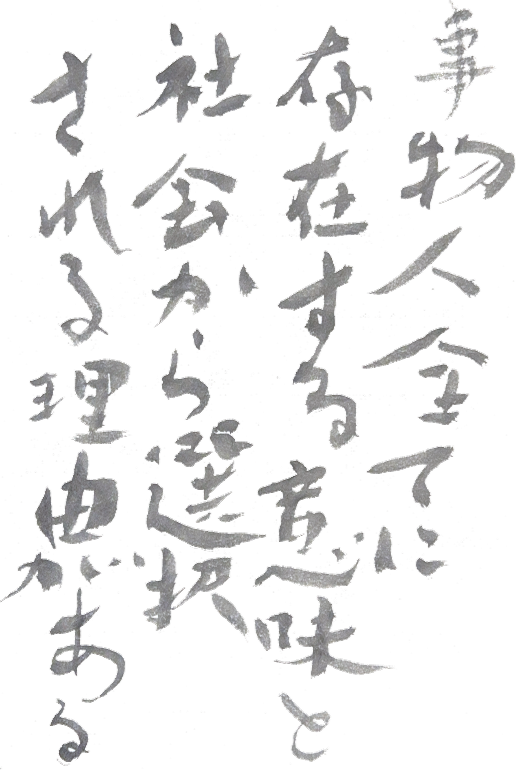
Why We
Choose
Certain
Things
When things and people hold intrinsic value in society, that society itself starts to take on greater meaning.
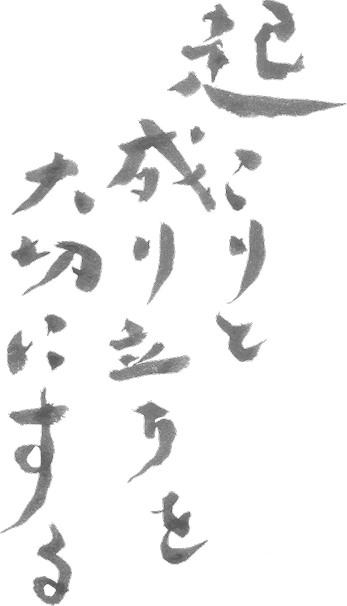
Valuing origins
and beginnings
What does it mean to recognize intrinsic value?
It means cherishing the origin of everything and everyone.
By cherishing beginnings, we are able to connect origins, history, and their ties to the present.
Recognizing intrinsic value means understanding the present, and how it came to be.
We can discover the beginnings of all things, whether they are a thousand years old or brand new.
Let us contemplate the space between ourselves and the past.
This is what Tsuki to Taiyo values above all.
What We Do
01
We discover
intrinsic value
Intrinsic value here refers not to financial value, but to value based on meaning.
Such value can be demonstrated by discovering one’s reason for being and purpose for action.
It can be found through resources (psychological sources) and trauma (psychological wounds) formed by understanding one’s lineage.
Only by demonstrating meaning is it possible to affirm one’s own existence without comparing oneself to others, and to create something new in a social setting.
02
We convey
intrinsic value
to the public
The relationship between the intrinsic value of something and society is a cyclical one, through which the mutual recognition of differences between self and others leads to understanding each other’s needs, providing support, and sustaining one another.
Value encompasses knowledge, time, labor, compensation, emotions, and more—both physical and non-physical aspects—and its quantity is neither defined nor constrained.
03
We provide
financial insight
The price that can be put on intrinsic value fluctuates based on mutual understanding, resonance, and expectations for the future.
Tsuki to Taiyo discovers financial value in the very existence and continuity of things.
Tsuki / Taiyo
content
The true purpose of objects, people, and ideas lies in how long they can continue to demonstrate their relevance to society and adapt to the times.
It also lies in how long they can continue to demonstrate their reason for being chosen.
Having identified essential value, we produce content that broadly addresses social issues and contributes to society through three axes:
Entertainment
Documentary
Information
CASE STUDIES
- Hadate Suisan: Food and its vessels as an expression of reverence for nature
-
Hadate Suisan: Food and its vessels as an expression of reverence for nature
Since distant antiquity, humans have lived by the grace of nature’s bounty. The people of Japan, a country surrounded by the sea, have embraced the ocean as a force beyond human agency, welcoming its gifts with gratitude and reverence.
In the words of Sen no Rikyu, “All food needs a vessel.” Food is not merely about taste; it is a comprehensive art form that connects us with nature through its vessel.
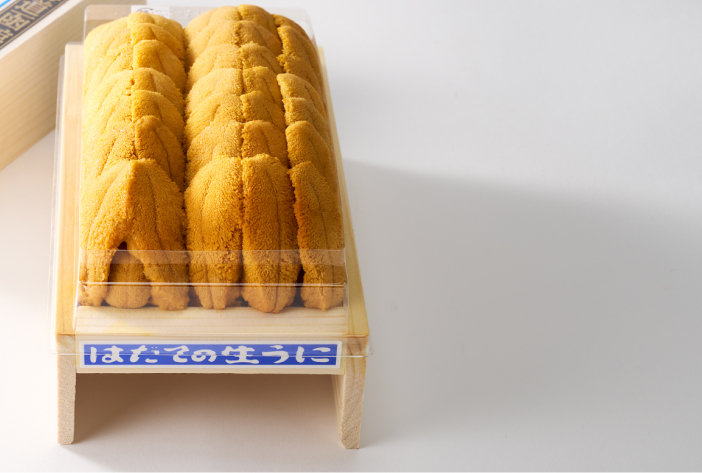
The sole focus of Hadate Suisan is the Kita Murasaki uni (sea urchin) harvested from the seas of Hokkaido. Hadate uni is sold in wooden containers called kiori, each one packed by hand. The proprietary techniques of the company’s “uni designers” are passed down only to a single member of the family in each generation. The uni designers do not seek to subjugate their material, positioning themselves instead as part of the cycle of nature.
In 2024, the company sold its finest uni in a special New Year’s Zodiac Tamatebako at the first auction of the year. This vessel was not created for the purpose of being auctioned off at a high price, but to express the preciousness of nature through food and traditional crafts.
In our age, when technological advances have increased the distance between humans and nature, we seek to make visible the gratitude for nature that permeates Japanese culture. And through the acts of creation and providing support, we pray for their perpetuation.
This artistic activity represents the cycle of food in our time.
- Saku Dental Futures Lab: Dental care as an expression of bodily precision and sensibilities
-

Saku Dental Futures Lab: Dental care as an expression of bodily precision and sensibilities
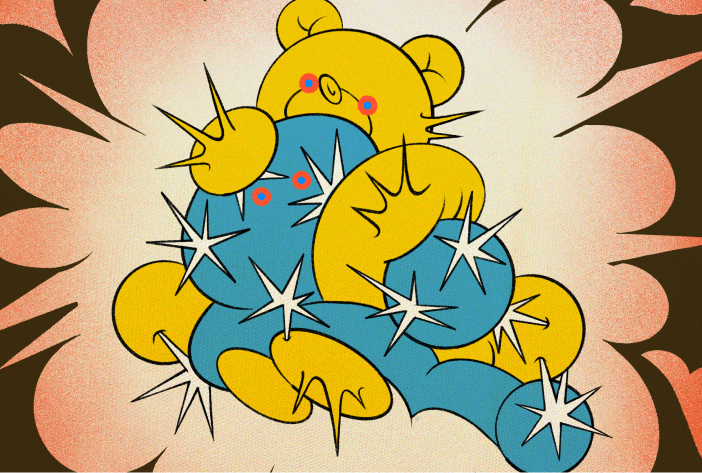
Our project with Saku Dental Futures Lab was sparked by Chairman Hiroki Nagase’s wish to promote preventive dentistry. While we all hope to be healthy, this desire doesn’t always translate into the action of actually visiting a dentist regularly. We believe this reflects a modern disconnect between mind and body.
In today’s world, our decision-making process is often overwhelmed by information overload, so we end up relying on explicit data like numbers and prices. But in an era of ever longer lifespans, we need to reexamine what it truly means to be healthy in both mind and body.
Art has the intrinsic power to move people’s hearts and inspire them to action. We decided to integrate art and the dental clinic, expanding its role as a space that nourishes both mind and body.
Teeth form the foundation for many physical sensations, forms of expression, and professional precision—from the simple act of eating to high-level athletic performance.
Saku Dental Futures Lab is a space for research and practice that reconnects sensibility and health with teeth as the starting point, aiming to fundamentally refine quality of life.
- Santassé at Kifune: Reviving ancient love letters
-
Santassé at Kifune: Reviving ancient love letters
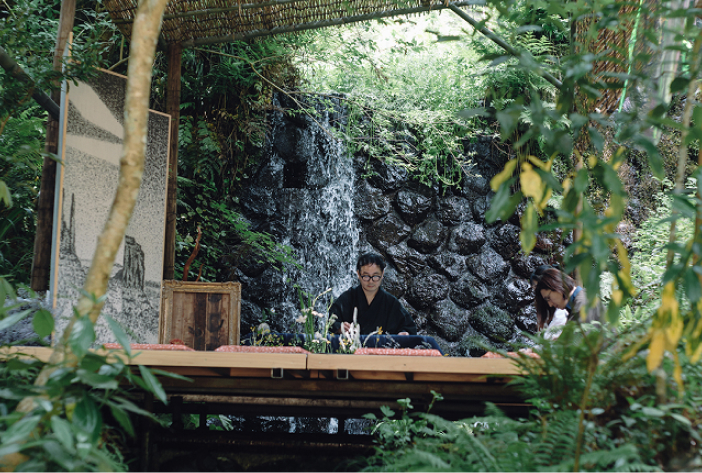
Hosted by fashion designer Tassei Onuki, this event where tradition and art intersect took place at Kyoto’s 1,300-year-old Kifune Shrine.
The theme was “Love Letters,” inspired by the shrine’s connection to Izumi Shikibu, a master of love poetry. Following the example of ancient nobles, the event revived the centuries-old Japanese tradition of conveying feelings by attaching poems to hand-picked flowers.
Visitors began by selecting a flower based on their own intuition, choosing either one of the dried flowers provided by floral designer Izumi Hosogai or a fresh flower arranged by Yuya Maeda.
Their chosen flower was then carefully placed on washi paper, and a love letter was written to convey the sender’s feelings for the intended recipient.
Awai is the Japanese word for the liminal space that emerges between two overlapping things. A love letter is a type of awai that connects people. By using flowers and words to convey feelings, they leave room for interpretation. Because they are not explicit, they can be reread and savored repeatedly, gradually nourishing the heart.
- Kokuyo Osaka Live: Where learning and play come together
-
Kokuyo Osaka Live: Where learning and play come together
Osaka Live is a practice by Kokuyo conceived of not as a completed office space, but as a live venue where thoughts and relationships are always being generated. It is also a hands-on project that used the 2025 World Expo as an opportunity to establish new relationships between society and business in Japan’s Kansai region.
Learning and play are two inherently linked practices. Based on this idea, we used the experience of food as a medium to stimulate the senses, spark questions, and encourage dialogue.
We explored the true taste of the sea through an octopus tasting, during which attendees could compare the taste of octopus from two different regions of Japan, driving home the fact that flavor is something created by nature itself.
We also deconstructed ingredients and cultural assumptions, conjuring up completely new culinary experiences through innovative food and drink pairings. Rather than imparting knowledge, we sought to inspire questions through sensory discovery, allowing learning to emerge organically within each participant.
Kokuyo Osaka Live transforms workplaces into dynamic spaces for learning and play, where senses and thought engage in vibrant dialogue.
- Hadate Suisan: Food and its vessels as an expression of reverence for nature
- Saku Dental Futures Lab: Dental care as an expression of bodily precision and sensibilities
- Santassé at Kifune: Reviving ancient love letters
- Kokuyo Osaka Live: Where learning and play come together
Hadate Suisan: Food and its vessels as an expression of reverence for nature
Since distant antiquity, humans have lived by the grace of nature’s bounty. The people of Japan, a country surrounded by the sea, have embraced the ocean as a force beyond human agency, welcoming its gifts with gratitude and reverence.
In the words of Sen no Rikyu, “All food needs a vessel.” Food is not merely about taste; it is a comprehensive art form that connects us with nature through its vessel.
The sole focus of Hadate Suisan is the Kita Murasaki uni (sea urchin) harvested from the seas of Hokkaido. Hadate uni is sold in wooden containers called kiori, each one packed by hand. The proprietary techniques of the company’s “uni designers” are passed down only to a single member of the family in each generation. The uni designers do not seek to subjugate their material, positioning themselves instead as part of the cycle of nature.
In 2024, the company sold its finest uni in a special New Year’s Zodiac Tamatebako at the first auction of the year. This vessel was not created for the purpose of being auctioned off at a high price, but to express the preciousness of nature through food and traditional crafts.
In our age, when technological advances have increased the distance between humans and nature, we seek to make visible the gratitude for nature that permeates Japanese culture. And through the acts of creation and providing support, we pray for their perpetuation.
This artistic activity represents the cycle of food in our time.
Saku Dental Futures Lab: Dental care as an expression of bodily precision and sensibilities
Our project with Saku Dental Futures Lab was sparked by Chairman Hiroki Nagase’s wish to promote preventive dentistry. While we all hope to be healthy, this desire doesn’t always translate into the action of actually visiting a dentist regularly. We believe this reflects a modern disconnect between mind and body.
In today’s world, our decision-making process is often overwhelmed by information overload, so we end up relying on explicit data like numbers and prices. But in an era of ever longer lifespans, we need to reexamine what it truly means to be healthy in both mind and body.
Art has the intrinsic power to move people’s hearts and inspire them to action. We decided to integrate art and the dental clinic, expanding its role as a space that nourishes both mind and body.
Teeth form the foundation for many physical sensations, forms of expression, and professional precision—from the simple act of eating to high-level athletic performance.
Saku Dental Futures Lab is a space for research and practice that reconnects sensibility and health with teeth as the starting point, aiming to fundamentally refine quality of life.
Santassé at Kifune: Reviving ancient love letters
Hosted by fashion designer Tassei Onuki, this event where tradition and art intersect took place at Kyoto’s 1,300-year-old Kifune Shrine.
The theme was “Love Letters,” inspired by the shrine’s connection to Izumi Shikibu, a master of love poetry. Following the example of ancient nobles, the event revived the centuries-old Japanese tradition of conveying feelings by attaching poems to hand-picked flowers.
Visitors began by selecting a flower based on their own intuition, choosing either one of the dried flowers provided by floral designer Izumi Hosogai or a fresh flower arranged by Yuya Maeda.
Their chosen flower was then carefully placed on washi paper, and a love letter was written to convey the sender’s feelings for the intended recipient.
Awai is the Japanese word for the liminal space that emerges between two overlapping things. A love letter is a type of awai that connects people. By using flowers and words to convey feelings, they leave room for interpretation. Because they are not explicit, they can be reread and savored repeatedly, gradually nourishing the heart.
Kokuyo Osaka Live: Where learning and play come together
Osaka Live is a practice by Kokuyo conceived of not as a completed office space, but as a live venue where thoughts and relationships are always being generated. It is also a hands-on project that used the 2025 World Expo as an opportunity to establish new relationships between society and business in Japan’s Kansai region.
Learning and play are two inherently linked practices. Based on this idea, we used the experience of food as a medium to stimulate the senses, spark questions, and encourage dialogue.
We explored the true taste of the sea through an octopus tasting, during which attendees could compare the taste of octopus from two different regions of Japan, driving home the fact that flavor is something created by nature itself.
We also deconstructed ingredients and cultural assumptions, conjuring up completely new culinary experiences through innovative food and drink pairings. Rather than imparting knowledge, we sought to inspire questions through sensory discovery, allowing learning to emerge organically within each participant.
Kokuyo Osaka Live transforms workplaces into dynamic spaces for learning and play, where senses and thought engage in vibrant dialogue.
Company Profile
- Name
- Tsuki to Taiyo Co. Ltd.
- Established
- October 2015
- CEO
- Keita Takayanagi
- Address
- Kusama Bldg. 4F, 1-18-5 Kojima,
Taito, Tokyo 111-0056
We discover and shape the intrinsic value of businesses, providing consulting and direction for business development, marketing, and design.